Lie VS Truth

A visual study · Lie versus truth

Easter or Yeshua's Resurrection

See both pictures first. Then read what stands behind them.

The lieEaster
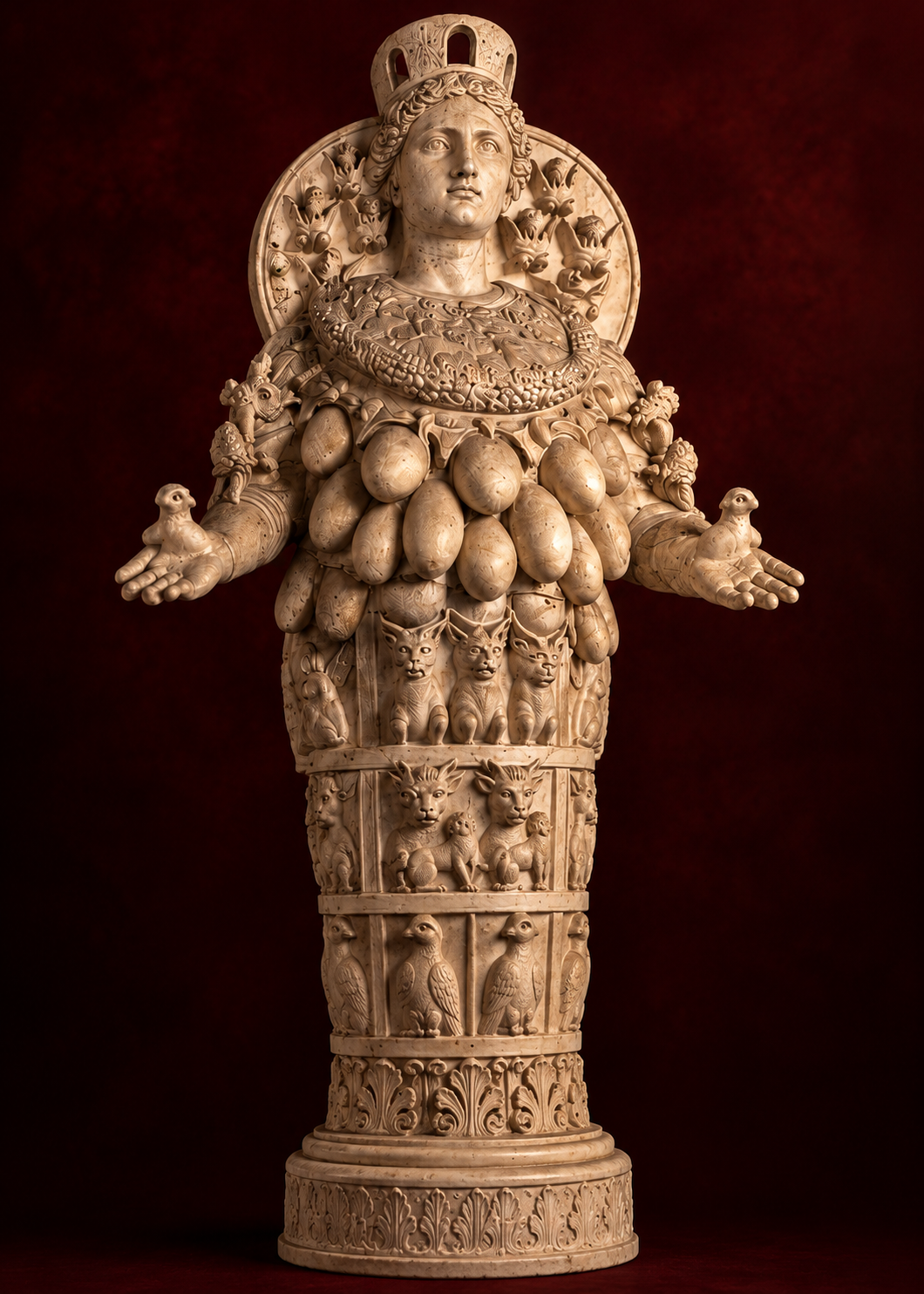
Full-length statue of Astarte
The truthPassover
The Passover lamb beneath a blood-marked doorway as the children of Israel leave Mitsrayim, with three T-shaped stakes visible in the distance

What Is Easter — and What Is Passover?

The lie · Human tradition

What Is Easter?

Easter is nothing else but the celebration of Astarte, a name that is one of the titles of Beltis, meaning the "queen of heaven."

The ancient gods of the pagans had many different names. This particular goddess was called Astarte in Babylon and appears as Ishtar on Assyrian monuments found in excavations at Nineveh. The English names Eostre and Easter, and the German name Ostern, have also been associated with her and interpreted as referring to movement toward the rising sun.

In the idolatrous sun worship of the ancient Chaldeans, Horus was the sun god and Astarte was his consort, or wife. An ancient plaque depicts her holding either two lilies or a lily in one hand and a serpent in the other. She was the bare-breasted fertility goddess of the East, celebrated annually at the spring equinox.

The truth · YHWH’s appointed way

Passover, Pesach, and the Resurrection

Passover is the appointed memorial of freedom. It commemorates YHWH's deliverance of the children of Israel from bondage in Mitsrayim and His protection of His faithful people through the blood of the lamb.

Passover is observed in the first month, on the fourteenth day, between the evenings (at twilight). The fifteenth day of the first month begins the appointed time of Unleavened Bread and is a special Shabbat (Lev. 23:5-7).

On the fourteenth day of the first month, the Israelites slaughtered a lamb without defect and put its blood on the doorposts. The lamb was roasted and eaten in haste with unleavened bread and bitter herbs (Ex. 12:3-11). This points to Yeshua—the Lamb of YHWH who takes away the sin of the world and our Passover lamb who was sacrificed for us (John 1:29; 1 Cor. 5:7).

Two different calculations

How Is the Date Determined?

The lie · Pagan calculation

Easter

  1. March 21 is treated as the fixed date of the spring equinox.
  2. The first calculated full moon on or after March 21 is then determined.
  3. Easter is set for the first Sunday after that full moon.

Easter is always tied to Sunday.

The truth · YHWH’s appointed time

Passover

  1. First, the local spring equalux is determined—the day when daylight reaches 12 hours.
  2. After the equalux, we wait for the NEW moon: the first sunset after it is day 1 of the first month (a thin bright crescent on the right).
  3. Passover is observed on day 14. By evening, the Moon is fully visible. After sunset, day 15 begins—the appointed time of Unleavened Bread.

Passover is not tied to a particular day of the week.

Easter Customs and Paganism

The lie · A symbol and its source

The Origin of Easter Eggs

The origin of Easter eggs: the ancient Druids carried an egg as the sacred emblem of their pagan order. In the idolatry of ancient Mitsrayim and Greece, and also in Japan and China, dyed or painted eggs were used for this "sacred" pagan festival.

The truth · YHWH’s appointed memorial

The Cup and Unleavened Bread

Passover is the appointed memorial of freedom. It commemorates YHWH's deliverance of the children of Israel from bondage in Mitsrayim and His protection of His faithful people through the blood of the lamb.

On the fourteenth day of the first month, the Israelites slaughtered a lamb without defect and put its blood on the doorposts. The lamb was roasted and eaten in haste with unleavened bread and bitter herbs (Ex. 12:3-11). This points to Yeshua—the Lamb of YHWH who takes away the sin of the world and our Passover lamb who was sacrificed for us (John 1:29; 1 Cor. 5:7).

Fertility imagery

The Rabbit and the Egg

Lent before Easter, lilies, eggs, rabbits, hot cross buns, and ham all have their roots in the ancient pagan religion of Babylon. The cakes offered to the queen of heaven, mentioned in Jeremiah 44:19, are presented here as the traditional hot cross buns that many people buy and eat every year during the "Easter season."

The rising sun

Lilies and Easter Sunday

These Easter customs honor the fertility goddess as the "Rising Sun" through the observance of the "Easter Sunday service." The days set aside in her honor are the so-called "Good Friday" and the first Sunday after the first full moon following the spring equinox.

The sacrifice and resurrection

The Lamb of YHWH

  1. At sunset, when the thirteenth day ended and the fourteenth day of the first month began, Yeshua ate the Last Supper with His disciples. This meal was given as a memorial of His sacrifice (Luke 22:14-20).
  2. During the night of the fourteenth day, after the Last Supper, Yeshua prayed to the Father in the garden of Gethsemane (Mark 14:32).
  3. That night He was betrayed and arrested (Luke 22:47-54).
  4. Early on the fourteenth day of the first month, Yeshua was taken before Pontius Pilate. He was crucified at the third hour—approximately 9:00 a.m. in modern clock time (Mark 15:1, 25).
  5. At the ninth hour—approximately 3:00 p.m. in modern clock time—Yeshua died on the execution stake. The Lamb of YHWH was sacrificed (Mark 15:33-37; John 19:30).
  6. Before sunset ended the fourteenth day and began the fifteenth day—the first day of Unleavened Bread and a special Shabbat—Yeshua had already been placed in the tomb and wrapped in a burial cloth (Matt. 27:57-60; Mark 15:42-46; Luke 23:50-54; John 19:40-42).

What will you celebrate?

Choose YHWH’s Truth!

Read again